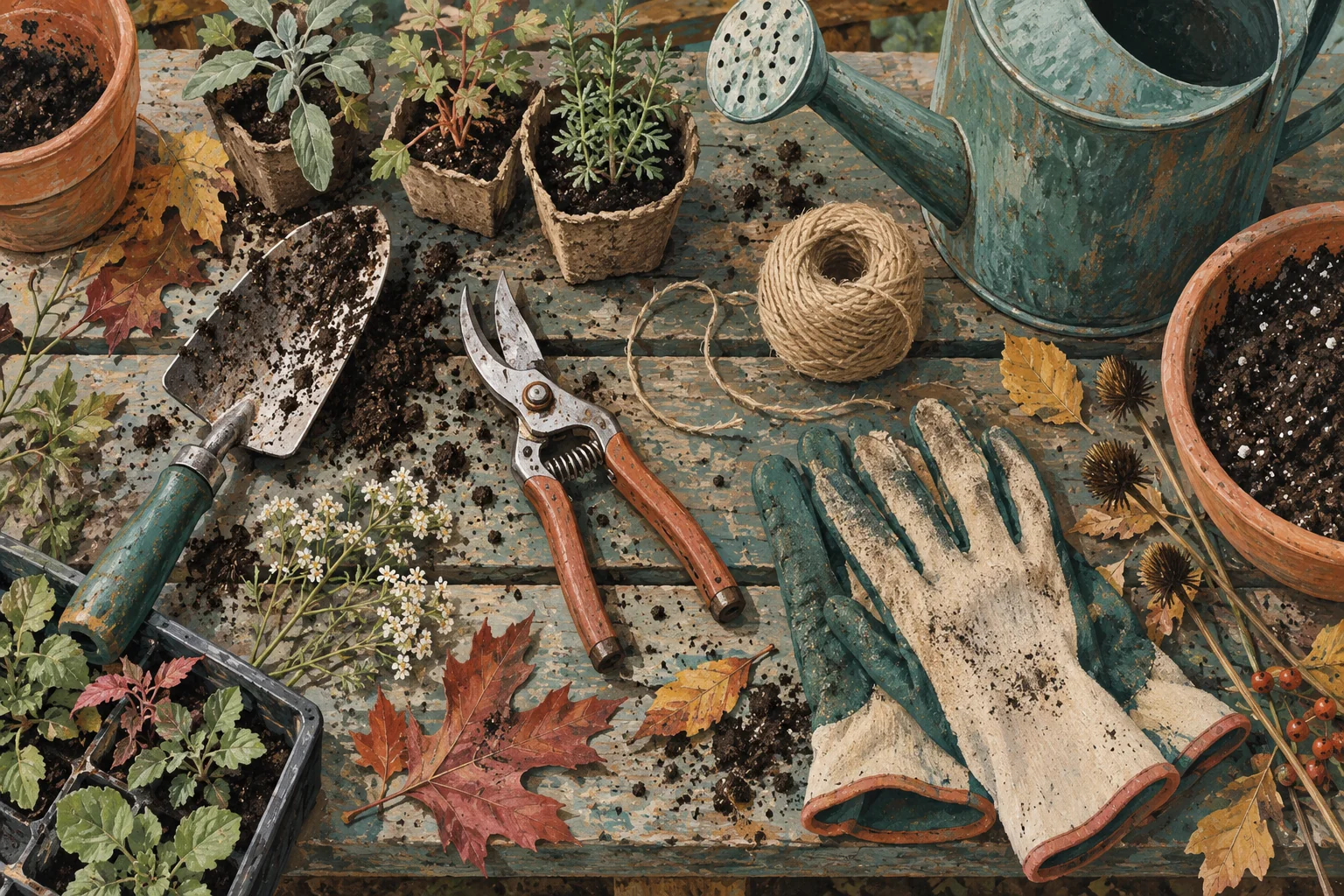
A few comfortable tools can take a first garden further than a shed full of unfamiliar equipment. Begin with the size of your beds, the route to water and where supplies will be stored. Borrow an occasional-use tool before committing to ownership.
These are ChattaHappening editorial ideas, not a sales-volume ranking, a laboratory test or a ranking of local companies. Choose the options that fit your situation.
1. Gloves that let your fingers move
Try opening a clasp or gripping a handle while wearing them. Choose the protection appropriate to the task and keep a dry pair where you can find it.
2. A hand trowel
Check grip comfort and the strength of the handle connection. A tool that feels balanced in your hand is more useful than a decorative set you hesitate to use.
3. Hand pruners
Choose a size you can operate comfortably and ask how the blade is maintained. Use the tool within its intended cutting capacity, not as a substitute for heavier equipment.
4. A watering can
Consider the weight when full and the distance to the garden. A removable rose offers flexibility, but the handle and balance deserve a hands-on check.
5. A hose suited to the route
Measure the actual path around obstacles. Compare storage space, connection compatibility and how easily you can manage the hose without dragging it through planted areas.
6. A nozzle with simple controls
Try the adjustment and shutoff mechanism. Choose settings you will use rather than the largest advertised count, and check how the nozzle connects to your hose.
7. A rake for the job
A leaf rake and a soil rake serve different purposes. Pick the task first, then compare handle length, head width and where the tool will be stored.
8. A bucket or garden tote
Use it to keep small supplies together and carry light cleanup loads. Avoid making a portable kit so heavy that you leave it behind every time.
9. Durable plant labels
Write the variety and planting date in a way you can read later. A simple record helps turn this season’s experiments into useful information for next season.
10. A soil-sampling container
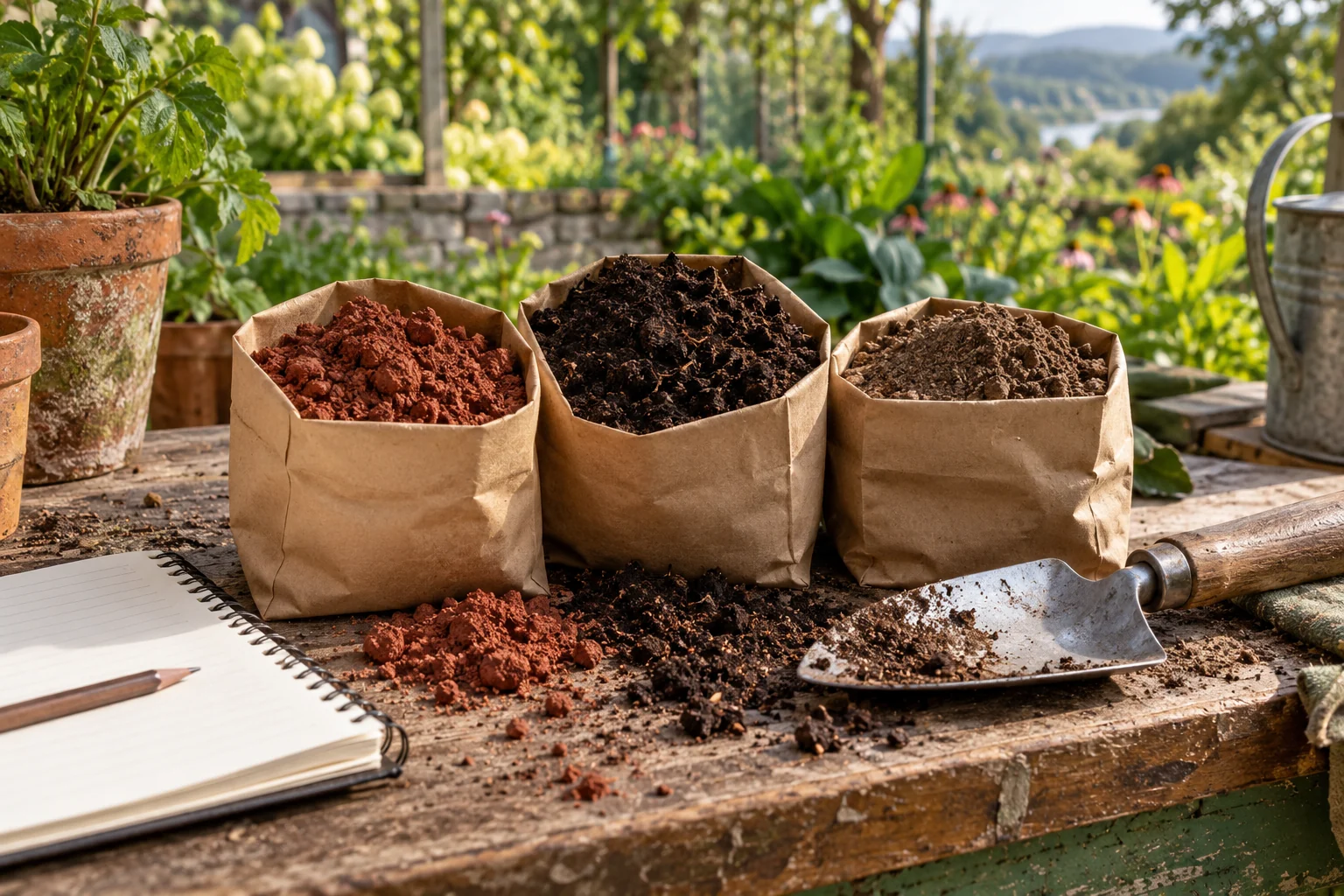
For an in-ground garden, follow the testing service’s collection instructions rather than guessing at amendments. UT’s Soil, Plant & Pest Center provides Tennessee soil-testing services.
Choose tools around a modest first project, then add equipment only when repeated use justifies it. For plant choices, soil recommendations or a growing problem, your county Extension office is a useful place to start a local conversation.
Sources & useful links
Source details checked October 10, 2026. Confirm changing details directly with the provider.